The Best Ways to Enjoy an Authentic Irish Pub NYC Visit
New York has no shortage of bars that hang a shamrock in the window and pour a decent pint. That alone does not make them Irish. The difference between a themed bar and a true Irish pub is easy to feel once you have spent enough evenings in both. One is built around optics. The other is built around habit, hospitality, and a room that seems to settle people into conversation within minutes.
That distinction matters if you want more than a quick Guinness before moving on to the next reservation. An authentic Irish Pub NYC experience is not really about checking off clichés. It is about understanding the pace of the place, the etiquette around the bar, the music if there is any, the quality of the pour, and the kind of crowd the pub draws on an ordinary Tuesday as much as on St. Patrick’s Day. The best visits happen when you let the pub be itself, rather than asking it to perform an idea of Ireland for you.
Plenty of New Yorkers, and plenty of Irish immigrants before them, have treated the city’s pubs as second living rooms. Some come for football in the morning, some for a quiet stew at lunch, some for the session that starts to gather after work, and some because they know the bartender by name and trust the room. If you want to enjoy that world properly, a few choices make all the difference.
Know what makes a pub feel genuinely Irish
The first sign of authenticity is usually not décor. In fact, some of the best Irish pubs in New York are visually understated. You might see old wood, mirrored back bars, snug corners, framed county jerseys, or photographs that have been there so long they now belong to the building. But the atmosphere matters more than the props.
A genuine pub tends to have a social center of gravity. People stand at the bar without feeling rushed. Bartenders make eye contact and keep things moving without theatrics. Regulars talk to one another, but the room rarely feels closed off to newcomers. There is a rhythm to service. It can be brisk during a rush, but it is not cold.
Music is another clue. If a place leans on nonstop stereotypes, blasting novelty songs at maximum volume every night, it often feels more like a costume party than a pub. In a good Irish house, music has context. Some evenings are quiet. Some feature trad sessions that grow naturally as musicians join in. Some have a singer in the corner who knows exactly when to hold the room and when to let people talk.
The food, too, says a lot. Nobody needs a pub to be fine dining, but a serious kitchen usually respects the basics. Brown bread should taste like someone cared. Shepherd’s pie, if it is on the menu, should not read like a lazy freezer special. A full Irish breakfast should feel generous without becoming a dare.
Then there is the pour. You do not need to be dogmatic about stout, whiskey, or cider, but an Irish pub earns trust when it handles them with care. A poorly kept tap line or indifferent bartender can flatten the entire experience in one glass.
Time your visit for the kind of night you actually want
The same pub can feel like three different places depending on when you walk in. That is one of the easiest details to overlook.
A weekday afternoon is often the best window if your goal is to observe the room and actually talk. You can notice who drops in for lunch, how the bartenders work, and whether the place has any soul when there is no crowd to manufacture energy. If a pub feels warm at 2 p.m. On a wet Wednesday, it usually has the right bones.
Early evening after work brings another side of the house. This is when many good pubs hit their stride. Office workers loosen their ties, neighborhood regulars claim familiar spots, and the room gains a hum without tipping into chaos. If you enjoy watching social energy build in layers, this is a strong time to go.
Late Friday and Saturday nights can be fun, but they can also blur the distinctions between a proper pub and any other crowded Manhattan bar. If you are chasing authenticity, prime weekend hours are not always your best bet. You may find yourself shoulder to shoulder with people who are there for noise rather than the pub itself.
Sunday has its own charm. In many Irish pubs, especially those with strong community roots, Sunday still carries a softer tone. There may be sport on the screens, families coming through earlier in the day, and a sense that people are lingering rather than racing. For many visitors, that is the sweet spot.
Sit where the pub reveals itself
People often underestimate how much their seat shapes the night. If you take a table in a far corner and never move, you can miss the social life of the pub almost entirely.
The bar is where most authentic Irish pubs show their character. That does not mean you need to dominate space or force conversation. It simply means the bar gives you access to the rhythms that make the room feel alive. You see how drinks are poured, how jokes are exchanged, how regulars interact, and how strangers gradually become less strange. Even ten minutes at the bar while you wait for a friend can tell you more than an hour hidden in the back.
That said, there are trade-offs. If you want dinner and a long conversation with someone you have not seen in years, a table may serve you better. The ideal approach is often mixed. Start at the bar for a pint, then move to a table if the night calls for food or privacy. In a smaller pub, the distinction matters less, because the whole room tends to function as one conversation anyway.
In older style pubs with snug seating or narrow floor plans, the best seats are not always the most obvious. A two-top near the front window can feel exposed. A side table halfway between the entrance and the bar may end up being the perfect vantage point. If you arrive early, take thirty seconds to look around before you commit.
Order with respect for the house
There is no need to turn ordering into a performance. Most bartenders would rather pour for someone straightforward than listen to a speech about how much they appreciate Irish culture. Still, making a few good choices can deepen the experience.
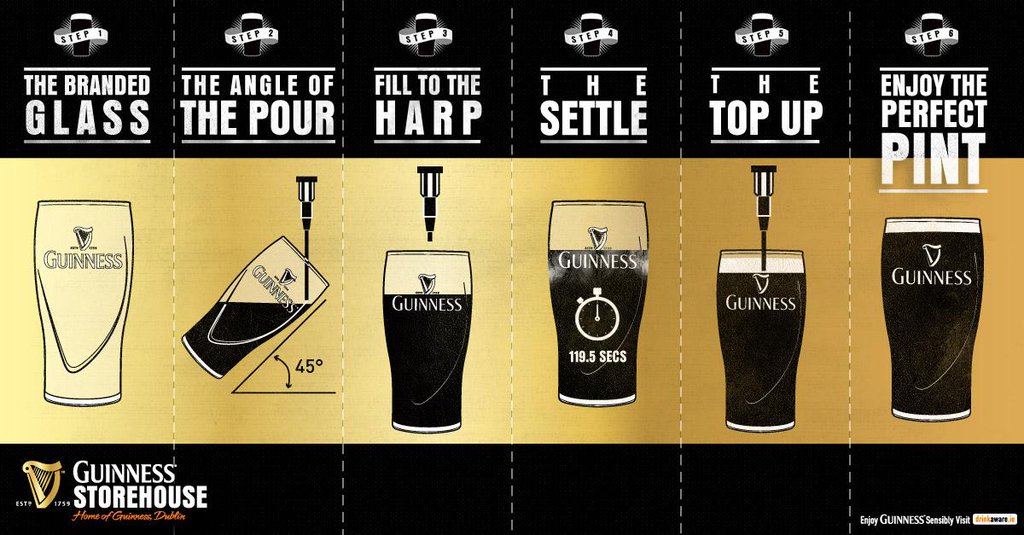
A pint of Guinness is the classic move for a reason, especially in a pub known for keeping it properly. New York has several places where the stout is consistently excellent, creamy, balanced, and served at the right pace. Watching a skilled bartender handle a two-part pour still has its own quiet pleasure, even if you have seen it before.
If stout is not your drink, cider is a sensible next step, especially if the house carries strong Irish options rather than generic stand-ins. Whiskey drinkers have room to explore, but this is where it helps to read the pub. Some bars take real pride in their shelves and can guide you toward something thoughtful. Others have a broad selection that is mostly decorative. Ask one clear question and judge the answer. A bartender who genuinely knows the stock will usually tell you quickly.
Food deserves the same approach. Go for the dishes the pub seems to care about, not the ones that merely fill out the menu. In many places, that means stew, fish and chips, sausage rolls, a toastie, or a full breakfast if you are there during the right hours. There is no shame in ordering the simple thing that the kitchen executes well.
The only common mistake is trying to bend the pub too far toward your own agenda. A lot of Irish pubs in New York are flexible, because New York hospitality requires flexibility, but the best experience comes when you lean into what the house already does well.
Learn the pace of service at the bar
One of the quiet pleasures of a proper pub is the way service moves with confidence. This can surprise people used to aggressive table check-ins or nightlife venues where every order feels like a transaction under pressure.
At the bar, especially in busy periods, eye contact matters. So does patience. Good bartenders usually have an internal map of who arrived when, even if they are handling six things at once. Waving cash in the air or trying to interrupt a pour almost never helps. It only marks you as someone who does not understand the room.
When you do order, keep it clean and direct. If you need time with the whiskey list, step aside and make space. If the pub gets crowded, settle tabs efficiently. New York bars move fast, and Irish pubs are no exception when they are packed.
Tipping norms are still New York norms. Courtesy is universal. What makes Irish pub service distinctive is not that it breaks city rules, but that it often softens them with more personality. Bartenders may remember your second order. They may ask where you are from if the room is calm enough. They may tease you a bit if you can handle it. That exchange is part of the atmosphere, and it works best when it stays natural.
Seek out the human signals, not just the visual ones
Tourists often evaluate a pub by looking around the room. Experienced pub-goers listen first. The quality of the conversation, the ease of the laughter, and the sound level tell you whether the place has integrity.
An authentic Irish pub rarely feels frantic unless there is a major sporting event or holiday crowd pushing it there. Even in a full room, there is usually enough conversational space to hear the person next to you. That matters because the Irish pub tradition is built on exchange. Pubs are places where stories get tried out, local news circulates, and strangers decide whether they are in the mood to become acquaintances.
Watch how staff treat people who are not spending heavily. Does the solo customer with a newspaper get the same respect as the group ordering rounds? Does the room welcome different ages, or does it collapse into one narrow demographic after dark? Is there anyone there who seems to come in simply because the pub is part of their routine? Those are stronger indicators of authenticity than any number of antique whiskey posters.
One of the best evenings I have had in an Irish pub in New York involved no live music, no special event, and no dramatic story. It was a rainy weeknight, the kitchen was turning out solid soup and soda bread, and the bartender knew enough to leave some people alone while drawing others into talk. A man at the far end of the bar had clearly been coming there for years. Two younger women nearby were there before a concert. By the second round, everybody had contributed something to the room. That is the magic. It is rarely flashy.
Treat live music as part of the room, not background content
Traditional music can elevate a pub visit, but only if the pub approaches it properly and the customers do too. There is a difference between a staged entertainment block and a genuine session.
In a good session, the music belongs to the room. It may begin informally. Players listen to one another. The volume is high enough to matter, low enough to preserve the social character of the pub. People nearby may lean in and give it proper attention, while others continue talking in a lower register. No one treats the musicians like a jukebox.
If you want that experience, ask the pub when music tends to happen and what kind. Some houses host polished, scheduled sets. Others have looser sessions that only make sense if you know how to listen to them. Either can be enjoyable, but they create different nights.
Crowd behavior matters here. A pub full of people shouting over every tune can kill the atmosphere quickly. On the other hand, a room that falls stiff and silent can feel more like a recital than a pub. The sweet spot is participation with restraint. If there is a chorus everyone knows, you will feel it. If there is not, let the tune breathe.
Eat enough to stay for the second hour
Many people make the mistake of treating the pub as a one-drink stop before dinner elsewhere. That can work, but it often cuts the experience short just as it https://paxtonvvam005.swiftnestly.com/posts/the-allure-of-a-traditional-irish-pub-in-nyc is becoming interesting.
A pub reveals itself in the second hour. The first drink helps you take in the room. The second is when patterns emerge. You notice who greets whom, which tables turn over, whether the kitchen holds up, and whether the place keeps you comfortable rather than merely occupied. Food helps extend that arc without turning the evening into a crawl.
You do not need a heavy meal. In fact, some of the best pub orders are modest and strategic. A bowl of stew, a sandwich, or a plate to share buys you time and keeps your palate from flattening. It also gives you a practical reason to settle in rather than rush.
This is especially useful if you are exploring an Irish Pub NYC destination for the first time. A full dinner reservation elsewhere creates pressure. A lighter pub meal gives you flexibility. If the room is special, you stay. If not, you move on without having committed your whole night.
Pay attention to sport, but do not confuse it with atmosphere
Irish pubs and sport have a natural bond in New York. Depending on the house, you may find Gaelic games, Premier League mornings, Six Nations rugby, horse racing, or the usual local teams drawing dedicated crowds. Watching a match in the right pub can be fantastic. It can also distort your impression of the place.
A pub that feels electric during a major football match may be ordinary on a non-match day. The reverse is also true. Some pubs that seem calm at first become unforgettable once a meaningful game pulls the community into focus.
If sport is your priority, call ahead or check carefully before showing up. A breakfast crowd for a 9 a.m. Kickoff has its own etiquette and energy. Arrive early, know what is on, and order promptly. If sport is not your priority, avoid peak viewing windows at pubs known for specific teams, because the room may be serving a different purpose that day.
The key is to understand whether you are visiting for the pub itself or for what the pub becomes around an event. Both are legitimate. They are simply not the same experience.
Choose neighborhood pubs over spectacle when possible
There are famous Irish bars in Manhattan that every visitor hears about, and some are worth seeing. But if your goal is authenticity, neighborhood pubs often offer more than marquee names.
A high-profile midtown spot may have history, a strong cellar, and a beautifully run operation. It may also spend much of its energy managing turnover from tourists and office workers. A quieter place in a residential pocket of the city may give you a truer sense of how Irish pub culture survives in New York day to day.
That does not mean you must avoid central locations. It means you should match expectations to geography. Near transportation hubs and major attractions, pubs often do multiple jobs at once. Deeper in the neighborhoods, they can settle into a more consistent identity.
If you are visiting the city for a few days, it can be smart to try both. Spend one evening in a storied, well-known house for the atmosphere and another in a less obvious local for the intimacy. You will likely learn more from the contrast than from chasing a single perfect venue.
A few mistakes that flatten the experience
The most common misstep is treating every Irish pub as interchangeable. They are not. Some lean literary, some sporty, some musical, some food-driven, and some are simply neighborhood institutions that do not need a hook. Knowing that in advance helps you choose the right room for the right night.
Another mistake is overplanning the evening to death. Reservations, strict timelines, and a packed itinerary can work against pub culture, which tends to reward looseness. If you have one fixed commitment after the pub, keep it late enough that you are not checking your phone every fifteen minutes.
A third is expecting constant performance. A real pub can be lively without being loud, welcoming without being sentimental, and memorable without producing a story fit for social media. Sometimes the best sign you picked well is that time passed faster than expected.
Finally, beware of holiday logic. St. Patrick’s Day can be fun, but it is often the worst possible day to judge whether a pub is authentically Irish. Crowds swell, service strains, and many venues operate under unusual conditions. If you want the truth of a place, go back a week later.
The best visits feel unforced
Enjoying an authentic Irish pub in New York is less about mastery than attentiveness. Pick a pub with a real point of view. Arrive at an hour that matches the mood you want. Sit where you can absorb the room. Order what the house is known for. Let the evening unfold at pub pace.
Do that, and the experience tends to meet you halfway. The right pint tastes better when it arrives in a room with memory. The music lands differently when it belongs to the place. Even a simple bowl of stew can feel like part of a much older ritual when the bar, the staff, and the regulars all seem to understand something you are just beginning to notice.
That is what people are usually chasing when they search for the best Irish Pub NYC experience, whether they realize it or not. Not just a drink, not just a photo, and not just a nod to heritage. They want the kind of room that lets city life soften for a while. New York still has those rooms. If you approach them well, they give back far more than a quick night out.
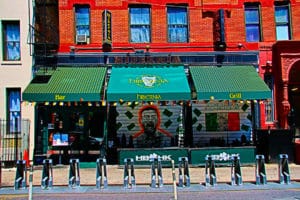
Hibernia Bar
401 W 50th St
New York, NY 10019, United States
Phone: +1 212-969-9703
FAQ About Irish Pub NYC
What is the best Irish pub in NYC?
The best choice depends on your location and preferred atmosphere. Hibernia Bar is a neighborhood Irish pub in Hell's Kitchen offering Guinness, Irish whiskey, pub food, and sports viewing.
Where do Irish people go in NYC?
New York's Irish community gathers in many neighborhoods and venues. Hibernia Bar welcomes Irish expats, local residents, and visitors at 401 W 50th St, just off Ninth Avenue.
Where can I watch GAA games in New York?
Hibernia Bar lists GAA among the sports it shows. Call +1 212-969-9703 to confirm coverage and opening times for a particular match before visiting.
What is the difference between a bar and a sports bar?
A sports bar emphasizes televised games and a shared viewing atmosphere. Hibernia combines sports viewing with the food, drinks, and hospitality of a neighborhood Irish pub.